Spreadsheets Meet Superstition: What Happens When South Asian American Kids Bring Data to the Matka Table
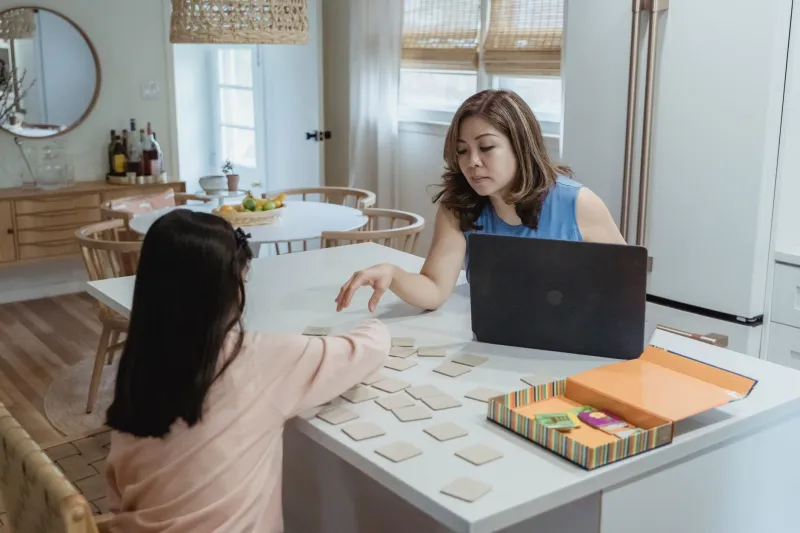
Picture a Sunday afternoon in a living room in Fremont, California. Two generations of the same family are staring at the same set of numbers. One of them — the father, who has been playing Matka since before his son was born — is consulting a worn notebook filled with handwritten patterns going back years. The other — his 26-year-old son, a data analyst by profession — is cross-referencing a custom-built spreadsheet on his laptop.
They're playing the same game. They're speaking almost entirely different languages.
This scene, in some variation, is playing out in South Asian American households across the country. And the conversation it's sparking is about a lot more than Matka.
The Game Their Parents Built
For the first generation of South Asian immigrants who brought Matka to the United States, the game carried weight beyond entertainment. It was a thread connecting them to home — to the streets of Mumbai, to the rhythms of a particular kind of community life that didn't have a direct American equivalent. The way they played reflected that. Heavy on intuition. Rooted in personal systems — lucky dates, family numbers, patterns divined from dreams or significant life events.
That approach isn't irrational. It's deeply human, and it's embedded in a long cultural tradition of finding meaning in numbers that runs through everything from astrology to religious practice. When an older player says he "feels" a certain number, he's drawing on a lifetime of experience and a framework for understanding luck that has its own internal logic.
But it doesn't show up well in a regression model.
What the Second Generation Is Bringing
The American-born or American-raised children of these players grew up differently. Many of them are educated in STEM fields, fluent in the language of probability and data, and deeply skeptical of any system that can't be validated empirically. When they encounter Matka — sometimes through curiosity, sometimes through direct family involvement — they bring those instincts with them.
"My dad has been playing for thirty years," says Vikram, a software engineer in his late twenties based in the Dallas-Fort Worth area. "He has this whole system based on combinations that have appeared before, patterns he's tracked by hand. I respect it. But when I started looking at the actual data, I wanted to understand what was actually predictive versus what was just confirmation bias."
Vikram built a tracking tool that logs results over time and flags statistical anomalies. He shares it with his father, who uses parts of it — the historical result logs, mostly — while ignoring the probability overlays. "He thinks I'm overcomplicating it," Vikram says, laughing. "I think he's underestimating it. We're both probably a little right."
This dynamic — respectful disagreement, partial adoption, ongoing negotiation — seems to be the most common outcome when these two approaches collide.
Where the Friction Lives
Not every family handles it as smoothly. The tension tends to get sharpest around a few specific fault lines.
The authority question. In many South Asian families, the older generation's experience carries significant weight. When a younger player suggests that a 30-year system might be built on faulty premises, it can land as disrespect rather than data. Framing matters enormously — "I found something interesting" tends to go over better than "your method doesn't work."
The culture question. Some older players feel that stripping the intuitive, culturally-rooted elements out of Matka fundamentally changes what the game is. For them, the ritual of selecting numbers based on personal significance isn't a bug in their strategy — it's the whole point. A number that means something to you is worth playing differently than a number a spreadsheet spits out.
The results question. This one cuts both ways. When a data-driven approach produces a win, younger players take it as validation. When the intuitive approach produces a win, older players feel equally validated. Neither side is wrong to notice what they notice. But neither side should overread a single result, either.
The Bridges Being Built
What's genuinely interesting — and maybe underreported — is how many families are finding ways to blend these approaches rather than fight over them.
Some younger players have become the de facto record-keepers for their families, digitizing years of handwritten notes and building searchable databases of historical plays. This preserves the older player's accumulated knowledge while making it accessible in new ways.
Others are using modern financial tools — budgeting apps, dedicated gaming bankrolls tracked through spreadsheets — to bring structure to what used to be a more informal arrangement, without changing how the actual numbers get selected.
"My mom still picks her numbers the way she always has," says Ananya, a graduate student in New York. "But now I help her track what she spends and set a monthly limit. She was resistant at first. Now she says it actually makes her enjoy the game more because she's not stressed about it."
That's not a clash. That's a collaboration.
What This Shift Means for Matka Culture in America
Every cultural tradition that survives immigration survives because it adapts. The version of Matka that exists in American cities today is already different from what it was in Mumbai decades ago — different platforms, different community structures, different legal contexts. The generational shift happening now is just the latest chapter in that ongoing evolution.
The second generation isn't destroying Matka. They're doing what every generation does: taking something they inherited and making it their own. Sometimes that means adding a layer of data analysis. Sometimes it means being more disciplined about money. Sometimes it means asking questions that older players never thought to ask.
And sometimes it means sitting next to your dad on a Sunday afternoon, looking at the same numbers through completely different eyes, and finding that the conversation itself — the friction, the laughter, the mutual stubborn certainty — is the whole point.
The game is just the excuse to have it.