Old Beliefs, Real Bets: How Superstition Quietly Drives American Matka Decisions
Ask a serious Matka player in Edison, New Jersey or Fremont, California what number they're running this week, and there's a decent chance the answer has nothing to do with statistical analysis or recent draw history. It might come down to the fact that their grandmother was born on the 7th, or that a red cardinal landed on their windowsill Tuesday morning, or simply that the moon was in a particular phase when they sat down to decide.
Superstition in Matka isn't fringe behavior. It's practically baked into the game's DNA — and in American South Asian communities, it hasn't faded as much as outsiders might expect. If anything, it's evolved into something more interesting: a hybrid belief system that blends old-country ritual with distinctly American sensibilities.
Why Superstition Survived the Immigration Experience
When South Asian families brought Matka culture to the United States over the past few decades, they didn't pack it neatly into a box and leave it unchanged. But certain beliefs traveled remarkably well. Numerology rooted in Hindu, Jain, and Islamic traditions crossed the Atlantic and the Pacific with surprising resilience.
The reason isn't hard to understand. Matka is, at its core, a numbers game with genuinely unpredictable outcomes. When outcomes are uncertain, human beings reach for pattern and meaning — and cultural belief systems provide exactly that scaffolding. Superstition fills the space that probability can't fully occupy.
For first-generation immigrants especially, these beliefs carry a double weight. They're not just lucky charms; they're threads connecting players to home, to family, to a sense of continuity in an unfamiliar country. Betting on your late father's birthday number isn't purely strategic. It's an act of remembrance dressed up as a wager.
The Beliefs That Actually Move Behavior
So which superstitions genuinely influence how American Matka players bet? A few stand out as having real traction in the community.
Auspicious days remain hugely influential. Tuesday is considered favorable in many Hindu traditions, tied to the planet Mars and associated with strength and action. Among some Muslim players, Friday carries spiritual weight. Players in these communities often wait for their preferred day to place significant bets, regardless of what the draws are doing on other days of the week.
Family numerology is arguably the most personal and persistent superstition in American Matka circles. Birth dates of parents, spouses, and children get translated into single digits and woven into number selections. A player whose son was born on the 14th might consistently favor combinations that reduce to 5 (1+4). This practice is so common that it's practically unremarkable — it would be more surprising if a player didn't use family numbers in some capacity.
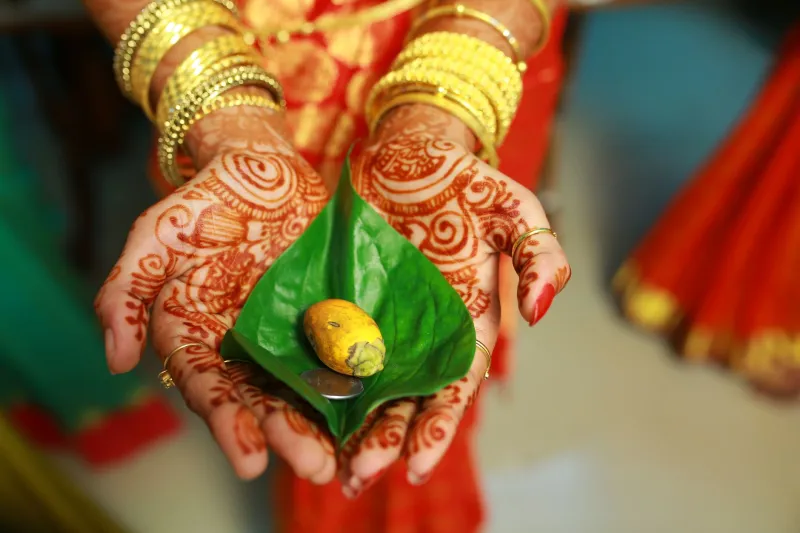
Color associations play a quieter but real role. Red is widely considered auspicious across South Asian cultures, and some players won't sit down to play without wearing something red or keeping a red object nearby. Green, associated with prosperity in Islamic tradition, shows up similarly. These aren't just personal quirks — they're shared community behaviors, which gives them a kind of social legitimacy.
Dream interpretation is another category that's more active than you'd guess. Specific dream symbols — snakes, elephants, water, particular numbers appearing in a dream — get cross-referenced against informal community dream dictionaries that have been passed down and adapted over generations. In WhatsApp groups and community forums, players regularly share dreams and solicit interpretations before deciding on numbers.
The Self-Fulfilling Prophecy Question
Here's where things get genuinely interesting from a behavioral standpoint. When a large enough portion of a betting community shares the same superstitious belief — say, that 3 is lucky on Tuesdays — and they all act on it, does that belief start to shape actual outcomes?
Not in the draw itself, obviously. The numbers come out the way they come out. But in how the community responds to results, superstition can create real feedback loops. A number that wins on an auspicious day gets remembered and amplified. One that loses gets quietly forgotten or attributed to some ritual error — maybe the player wasn't wearing the right color, or didn't say a prayer before playing.
This selective memory reinforces the original belief without requiring the belief to be objectively true. It's a closed loop, and it's remarkably durable. Social psychologists would recognize it immediately as confirmation bias operating at a community scale.
There's also a coordination effect worth noting. When many players in a community gravitate toward the same numbers on the same days for superstitious reasons, they effectively create informal clusters of shared behavior. This doesn't change odds, but it does mean that when those numbers hit, the wins tend to be celebrated loudly and publicly — further cementing the superstition's reputation.
What American Life Has Changed
Not every traditional belief made the crossing intact. Some superstitions have been quietly abandoned or significantly modified in American Matka communities.
Ritual timing tied to specific Hindu or Islamic calendar events — certain festivals, lunar dates, auspicious muhurtas — is harder to maintain when you're working a nine-to-five in suburban Chicago or running a business in Houston. Players who might have waited for a specific astrological window back home often can't afford that kind of scheduling flexibility here. The result is a pragmatic loosening: the idea of auspicious timing survives, but the precision gets rounded off.
Some superstitions have also been quietly dropped when they conflicted too sharply with American social norms. Beliefs that were tied to caste practices or gender restrictions — women not playing on certain days, for instance — have largely faded in diaspora communities, where the social enforcement mechanisms that kept those rules alive simply don't exist.
What's replaced them, interestingly, is a kind of personalized superstition — individual players developing their own private rituals based on their own win history. If you happened to be eating mango when you hit a big number two years ago, there's a reasonable chance you've thought about mango before placing a bet since. American individualism has seeped into the superstition, making it more bespoke and less communal in some quarters.
Playing With Belief, Not Just Numbers
None of this means superstition is a strategy. The numbers in Matka don't know what day it is, what color shirt you're wearing, or whose birthday you're honoring. The math is indifferent.
But that's almost beside the point. For many American Matka players, superstition isn't really about improving odds. It's about making the experience feel meaningful, connected, and grounded in something larger than a random draw. It's about community — sharing a belief system with your uncle, your neighbor, your WhatsApp group, your cultural memory.
And honestly? There's something worth respecting in that. In a game defined by uncertainty, ritual gives players a sense of agency and belonging that pure statistics never could. The belief that your numbers are your numbers — chosen with intention, blessed by tradition, tied to the people you love — changes how the game feels, even when it doesn't change how it ends.
At HM Matka, we've always believed that understanding why people play is just as important as understanding how they play. And superstition, it turns out, tells you a lot about both.