Cash, Trust, and Side Channels: The Informal Financial World Serious Matka Players Have Built in America
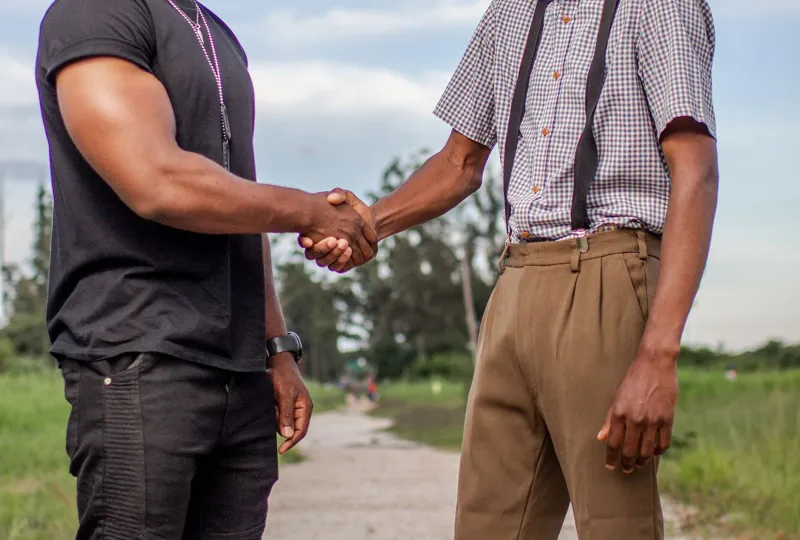
Walk into certain grocery stores in Jackson Heights, Queens, or Little India in Artesia, California, and you'll notice something that doesn't quite add up. A quiet conversation in the corner. A handshake that lasts a beat too long. A folded envelope sliding across a counter. Nothing dramatic. Nothing loud. Just the ordinary machinery of a financial system that most Americans have never heard of — and that many Matka players have quietly been building for decades.
This isn't about crime thrillers or back-alley drama. It's about something far more human: communities that learned, through hard experience, not to trust institutions they'd never been welcomed into — and who built something else entirely.
Why Banks Were Never Really the Plan
For many South Asian immigrants who arrived in the US during the 1970s, 80s, and 90s, traditional American banking wasn't just inconvenient — it was actively hostile. Credit histories didn't transfer across borders. Minimum balance requirements wiped out savings. Language barriers made disputes nearly impossible to navigate. And for undocumented community members, a bank branch might as well have had a "not for you" sign on the door.
Matka, which had already traveled from Mumbai's cotton market floors to immigrant neighborhoods across the US, brought more than a game with it. It brought the social infrastructure that had always surrounded it — the bookies who extended credit, the runners who moved money, the community elders who adjudicated disputes. That infrastructure didn't disappear when players crossed the Atlantic. It adapted.
The result, over time, was something remarkably functional: a parallel financial ecosystem that handles lending, settlements, credit extension, and even savings — all without a routing number in sight.
How the Lending Circles Work
At the heart of this economy is something that looks a lot like a traditional chit fund or rotating savings association — a concept with deep roots in South Asian, African, and Caribbean communities worldwide. Players pool contributions on a regular schedule. Members take turns drawing from the pot. It's simple, it's effective, and it's been running in immigrant communities long before fintech startups tried to rebrand the idea as "social saving."
But in Matka circles, these structures carry an extra layer of complexity. Winnings get folded back in. Credit gets extended to trusted players who've had a rough stretch. Repayment terms are negotiated verbally, enforced by reputation rather than contract. A player who stiffs the circle doesn't just lose money — they lose standing in a community where standing is everything.
"The bank doesn't know me," one longtime player in the Chicago area explained to a community journalist a few years back. "These people know me. They know my family. That's a different kind of collateral."
That social collateral — the weight of shared reputation — is what makes these networks function where formal institutions have historically failed immigrant communities.
Digital Disruption: Modernizing the Shadow Economy
Here's where things get genuinely complicated. The same digital revolution that brought Matka from neighborhood parlors to smartphone apps has also started rewiring the financial systems underneath it.
Cash, for generations the default medium, is increasingly awkward. Venmo and Zelle work fine for small transactions, but they leave trails — and trails create risk for participants who'd prefer discretion. So a growing segment of the community has shifted toward cryptocurrency. Bitcoin and stablecoins like USDC offer the speed of digital transfer with the traceability-by-choice that cash used to provide automatically.
This shift isn't without tension. Older players, who built their trust networks on face-to-face relationships and physical currency, view the crypto pivot with genuine suspicion. "If I can't look someone in the eye when money changes hands, I don't feel right about it," is a sentiment that comes up repeatedly in community conversations. Younger players, meanwhile, point out that crypto wallets can be set up in minutes and that cross-border transfers — important for players with family financial obligations in India, Pakistan, or Bangladesh — are dramatically cheaper than wire transfers.
The generational divide is real, and it mirrors broader tensions in South Asian American communities about what gets preserved and what gets updated.
The Risk Ledger Nobody Talks About
It would be dishonest to write about these networks without acknowledging the genuine dangers they carry.
Because these systems operate outside regulatory frameworks, participants have no formal recourse when things go wrong. And things do go wrong. Lending circles collapse when a trusted member disappears. Credit extended on good faith goes unpaid. Disputes that might be resolved through small claims court in the formal economy instead fester into community fractures that last years.
More seriously, the same opacity that protects participants from unwanted scrutiny can also shield bad actors. Predatory lenders operating within these networks charge interest rates that would be illegal under state usury laws. Players who fall behind on informal debts sometimes face pressure tactics that formal debt collectors couldn't legally employ. The trust that makes these systems work can be weaponized by the small percentage of people willing to exploit it.
And then there's the federal angle. Financial activity structured specifically to avoid reporting requirements — a practice known as "structuring" — is a federal crime under the Bank Secrecy Act, regardless of whether the underlying transactions involve anything illegal. Players who move money in patterns designed to stay under reporting thresholds can find themselves facing serious legal exposure, even if their actual Matka activity would otherwise be a minor matter.
A System Built on Necessity, Sustained by Choice
What's striking about these parallel financial structures is that they've outlasted the original conditions that created them. Today's South Asian American community includes doctors, engineers, and entrepreneurs with pristine credit scores and full access to every financial product the US market offers. The institutional barriers that made informal networks a necessity for earlier generations have largely come down.
And yet the networks persist — and in some ways, they're growing.
Partly that's inertia. Partly it's genuine preference for community-based financial relationships over algorithmic ones. But there's also something more interesting happening: a recognition that formal financial systems, for all their consumer protections and regulatory oversight, still don't serve every need. They're slow. They're impersonal. They don't know your grandmother.
The informal economy around Matka in America isn't going anywhere. It's evolving — absorbing digital tools, navigating new legal landscapes, and continuing to serve a community that has always been remarkably good at building what it needs when the existing options fall short.
For players navigating this world, the same advice applies that's always applied in Matka: know who you're dealing with, understand what you're risking, and never put in more than you can genuinely afford to lose — whether that's at the number board or in the lending circle that surrounds it.