The Crowd Knows Best? How Group Predictions Are Reshaping Matka Decisions in American Communities
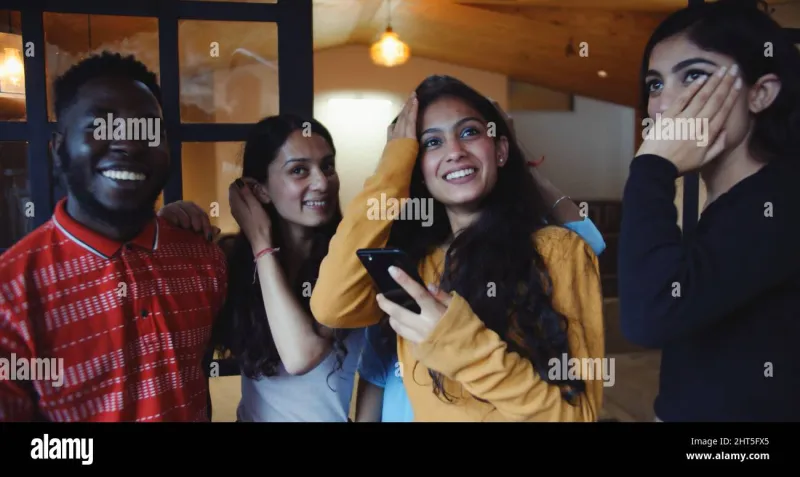
Photo: diverse South Asian friends looking at phone together in community gathering, via c8.alamy.com
When the Group Chat Becomes Your Lucky Charm
Sunday evening, somewhere in New Jersey. A WhatsApp group with forty-seven members lights up. Someone posts a chart. Someone else counters with a dream they had. A third person drops a voice note in Gujarati. Within minutes, a rough consensus forms around a pair of numbers — and by Monday morning, half the group has played them.
This is modern matka culture in America, and it's happening in living rooms, community centers, and phone screens from Queens to Fremont. The game has always been social, but the tools have changed. And with those tools, the way individual players make decisions has shifted in ways that are genuinely fascinating to unpack.
A Game Built on Shared Roots
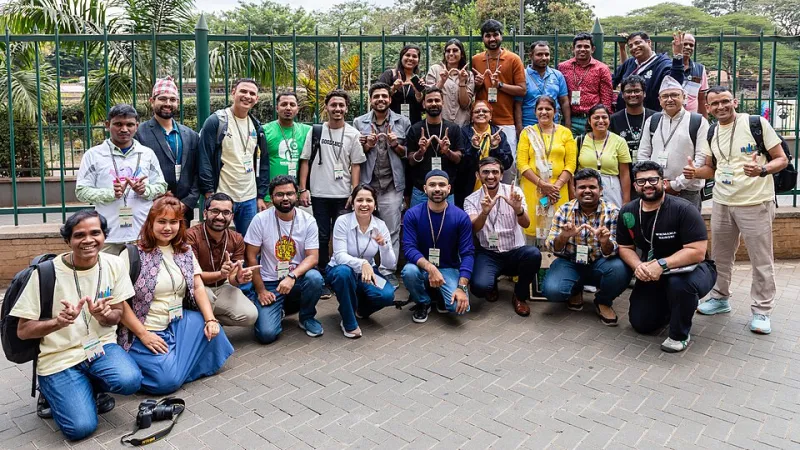
Matka didn't arrive in the United States as a solo sport. It came tucked inside immigrant networks — carried by South Asian communities who brought their cultural touchstones along with their suitcases. For decades, the game lived in informal spaces: barbershops, temple parking lots, weekend gatherings where elders passed down number systems the way others might pass down recipes.
That oral tradition was the original prediction group. Long before anyone had a smartphone, families were pooling their hunches. Uncle Prakash had a system based on calendar dates. Auntie Meena swore by the numbers that appeared in wedding invitations. These weren't random superstitions — they were community rituals, ways of staying connected to something familiar in an unfamiliar country.
What's changed is the scale. Digital platforms have taken those kitchen-table conversations and amplified them exponentially.
The WhatsApp Effect
Talk to any active matka enthusiast in a major US metro area and you'll hear some version of the same story: there's a group, there are regulars, and there's a kind of unspoken social contract around number-sharing.
Community organizers who run these spaces describe a layered dynamic. There are the "anchors" — experienced players whose picks carry weight — and there are the followers, newer or less confident participants who wait to see what the anchors say before committing. In between, you get the debaters, people who love the analysis as much as the game itself.
"It's not just about the numbers," explained one organizer based in the Chicago area who asked to remain anonymous. "It's about belonging. People want to be part of the conversation. The prediction is almost secondary."
That's a telling observation. When community belonging becomes part of the equation, the psychology of decision-making shifts. You're no longer just picking numbers based on your own reasoning — you're navigating social dynamics, not wanting to go against the group, not wanting to seem like you don't trust the anchor's expertise.
Collective Wisdom vs. Collective Blind Spots
Here's where things get complicated. There's genuine value in aggregating information across a group. If twenty people are tracking different historical patterns and they all independently land on similar numbers, that convergence might mean something. Diverse inputs, independently processed, can sometimes produce smarter outcomes than any single person's analysis.
But matka prediction groups don't always work that way. Often, one or two vocal members set the tone early, and others anchor to that initial suggestion. This is a well-documented behavioral phenomenon — anchoring bias — and it's particularly powerful in social settings where going against the crowd feels uncomfortable.
Add confirmation bias into the mix and you've got a feedback loop. When the group's pick wins, it gets celebrated loudly. When it loses, people move on quickly. Over time, the group's collective memory skews toward its successes, reinforcing the belief that the shared system works.
"People remember the wins because they felt them together," noted a behavioral researcher familiar with immigrant gaming communities. "Shared wins feel bigger. Shared losses get attributed to bad luck, not bad process."
Family Traditions as a Special Case
Not all group influence is as anonymous as a WhatsApp thread. Family betting traditions carry a different kind of weight — one that's tied up in respect, identity, and generational continuity.
For many second-generation South Asian Americans, engaging with matka is partly a way of staying connected to a parent's or grandparent's cultural world. Playing the numbers that a father always played, or honoring a grandmother's lucky combination, isn't really about statistical optimization. It's about meaning.
This makes family-based prediction traditions resistant to outside analysis. You're not going to tell someone to abandon their late father's number system because the hit rate doesn't justify it. And honestly? That's fine. Not everything in gaming culture needs to be optimized. Some of it is just human.
When Individual Choice Gets Crowded Out
The more interesting question is what happens when community pressure starts overriding genuine individual judgment. A few patterns show up consistently in these spaces.
First, there's the reluctance to go public with a contrarian pick. Players who privately think the group is wrong will often just play their own number quietly without announcing it — avoiding the social friction of disagreement. This means the group's stated consensus is always noisier than the actual distribution of individual beliefs.
Second, there's what you might call "loyalty plays" — sticking with the group's number even when your own gut says otherwise, because you don't want to be the person who went solo and won. Winning against your community's pick can feel awkward in tight-knit groups.
Third, and maybe most interesting, is the emergence of sub-groups within groups. As larger WhatsApp communities form, smaller clusters break off — a few trusted friends who share their real picks privately, separate from the main channel's noise. It's a natural immune response to groupthink.
Finding Your Own Signal in the Noise
None of this means community prediction spaces are bad. They're genuinely fun, they keep people connected, and sometimes the crowd really does land on something interesting. The key is staying aware of the social mechanics at play.
The players who seem to navigate these spaces most effectively are the ones who treat group input as one data point among many — not as a verdict. They engage with the conversation, absorb what's useful, and then make their own call. They're part of the community without being consumed by it.
At HM Matka, we think that balance is worth aiming for. Your lucky numbers should feel like yours. Let the group inspire you, challenge you, entertain you. Just make sure the final pick still comes from somewhere real — your own read on the game, your own instincts, your own reasons.
Because in the end, it's your name on the play, not the group chat's.